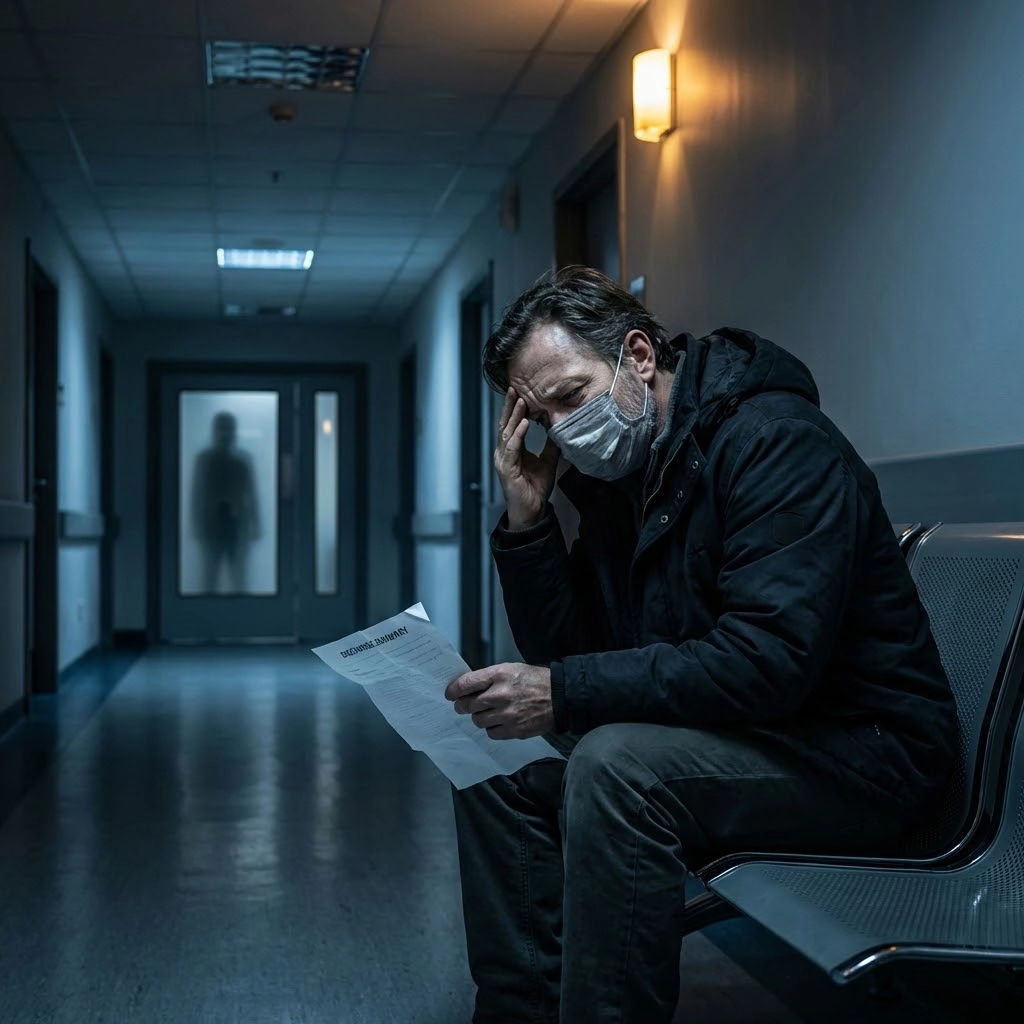
I went to the hospital because of a headache. Not a dramatic one, not the kind you call an ambulance for—just a dull, stubborn pain behind my eyes that refused to fade. I almost ignored it. I almost went to bed instead. That small decision saved my life.
The emergency room was unusually quiet for a weekday night. No crying children, no raised voices, just the low hum of fluorescent lights and the steady beeping of machines. A nurse took my information, smiled politely, and told me to have a seat. That’s when I noticed him—an older man sitting across from me in a hospital gown, staring straight ahead. He didn’t have a wristband. He didn’t blink.
At first, I assumed he was asleep with his eyes open, until his head slowly tilted and his gaze locked onto mine. Something about his eyes made my stomach twist. Without breaking eye contact, he lifted one finger and pressed it to his lips, silently telling me not to speak. A shiver ran through me. When my name was called and I stood up, I glanced back. The chair where he had been sitting was empty.
Inside the exam room, the doctor asked routine questions and checked my vitals. Everything looked normal. When I mentioned the man in the waiting room, her expression changed for just a moment—so quickly I almost missed it. She told me no one had been sitting there. Then she asked a question that made my chest tighten: had anyone followed me to the hospital?
Before I could respond, she locked the door. Her voice dropped to a whisper as she told me that if anyone asked about me, I had already been discharged. She handed me a hospital bracelet, but when I looked down, it didn’t have my name on it. Before I could question her, the lights went out. Red emergency lighting flooded the room as a distant scream echoed down the hall and abruptly stopped.
The doctor grabbed my arm and warned me not to trust anyone wearing blue scrubs. From the hallway, I heard slow, dragging footsteps. Then a voice I recognized—the same calm voice from the waiting room—said my room number aloud. Panic surged through me as the doctor pushed me into the bathroom and told me to hide, not to flush, not to make a sound.
Through the thin walls, I heard the exam room door open. Papers rustled. A chair scraped against the floor. The doctor spoke again, but her voice sounded wrong, empty, as she told him I wasn’t there. After a long pause, the man laughed softly and said that I never was.
I don’t know how long I stayed hidden. When I finally stepped out, the room was empty. The doctor was gone. The lights were still dim. The only thing left was the bracelet on my wrist, bearing a stranger’s name. I left the hospital before sunrise without telling anyone.
The next day, I searched for news of a power outage or disturbance. There was nothing. No reports. No incidents. That night, I found a voicemail on my phone I didn’t remember receiving. A man’s calm voice whispered that I had done exactly what I was supposed to do, and that next time, I wouldn’t be so lucky.
I still get headaches. But I will never go back to that hospital. And every night before I sleep, I check my wrist—just to make sure the bracelet is gone.