
When a woman from London noticed a dark spot on her scalp, she trusted her instincts and sought medical advice. Yet, a specialist dismissed the idea of melanoma, and another diagnosed it as a fungal infection. By the time someone took her concerns seriously, the cancer had already reached her skull.
Sarah Lee, 29, had a strong sense something wasn’t right. When a dark mole suddenly appeared on her scalp, she didn’t wait—she booked a doctor’s appointment. But instead of answers, she was met with dismissal, not once, but three separate times.

What happened next serves as a stark warning: warning signs can be overlooked, and misplaced trust in medical opinions can have devastating consequences. Sarah’s journey was only beginning.
It started in summer 2021 when she casually took a photo of her head to check how much her hair had grown—she hadn’t been to a salon due to the pandemic. That photo revealed something unexpected: a small, dark mole nestled among her fine blonde hair. It hadn’t been there before.

She contacted her GP and was referred to a dermatologist. The mole was examined with a dermatoscope. The specialist told her three things: it didn’t look dangerous, she was too young for melanoma, and skin cancer on the scalp was highly unlikely due to hair protection from UV rays. All three claims were incorrect.
In the following months, the mole changed. It darkened, spread, and multiplied. Sarah went back to her GP to report the progression. This time, the mole looked even more concerning: blue-black in color and spreading. Still, she was told it was a fungal infection and would resolve on its own. No treatment was offered.

Trusting her intuition, Sarah pushed for a second opinion and saw another dermatologist in December 2021. This time, her worries were taken seriously. The new specialist examined her scalp and immediately expressed concern.
The suspicious growths were removed right away and sent for biopsy. The surgery left her with a large scar on her scalp. The wait for results over the holiday period was agonizing.

In early January 2022, Sarah got the call—stage three malignant nodular melanoma. The cancer had already invaded her skull. The diagnosis was a shock. She nearly fainted.
Sarah had never used tanning beds, always applied SPF 30 sunscreen, and grew up in rainy Wales. Her diagnosis brought confusion and fear. How much time did she have? Would she lose her hair? Why did three doctors tell her it was nothing?
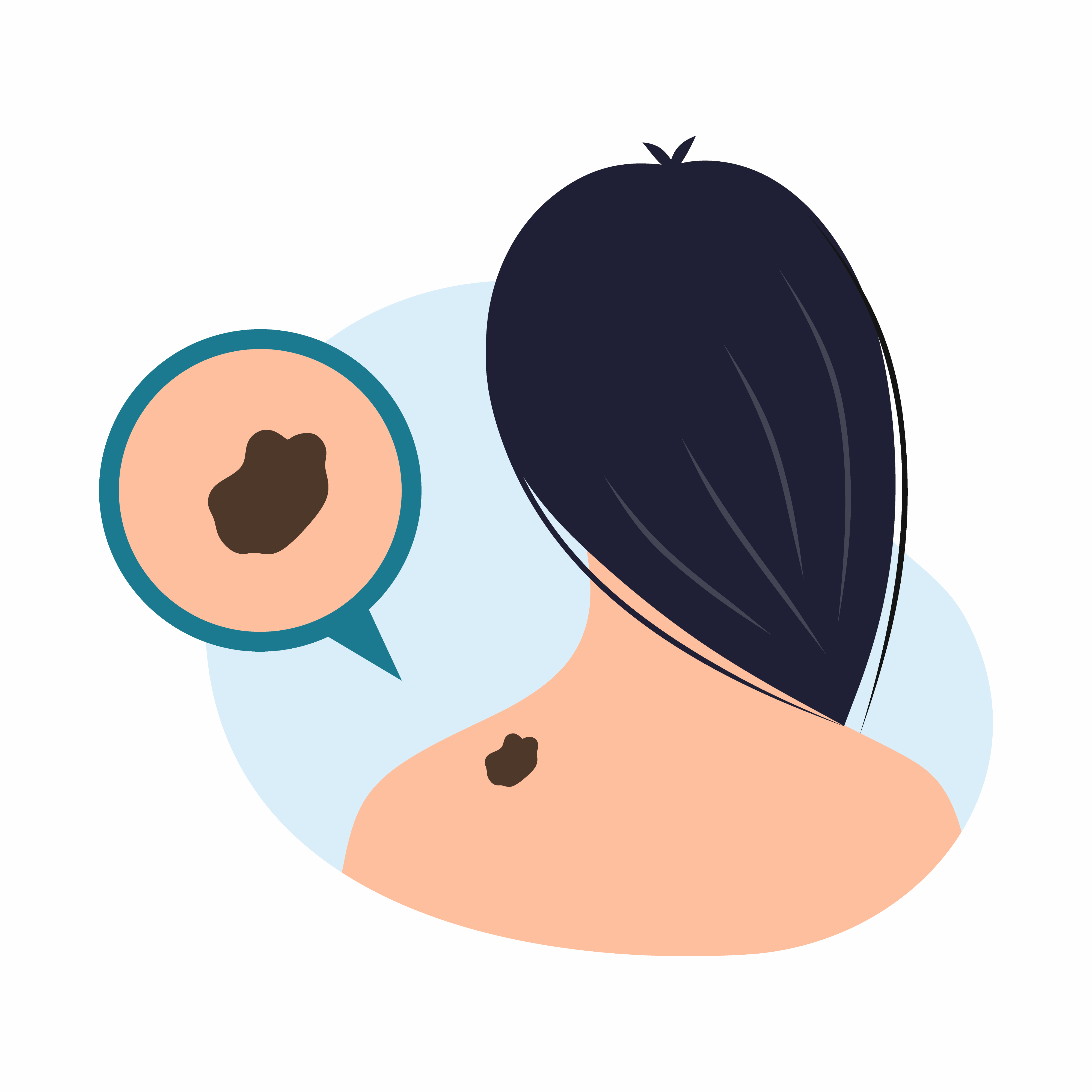
Melanoma is rare but deadly. It makes up only 1% of skin cancer cases but causes most related deaths. Nodular melanoma is particularly aggressive, growing deeper and faster than other forms. It originates in melanocytes—the pigment-producing skin cells—and can quickly spread to tissue, lymph nodes, and organs.
Early diagnosis is crucial, but melanoma is especially difficult to detect on the scalp. Many cases begin as changing moles. Doctors recommend the ABCDE system:
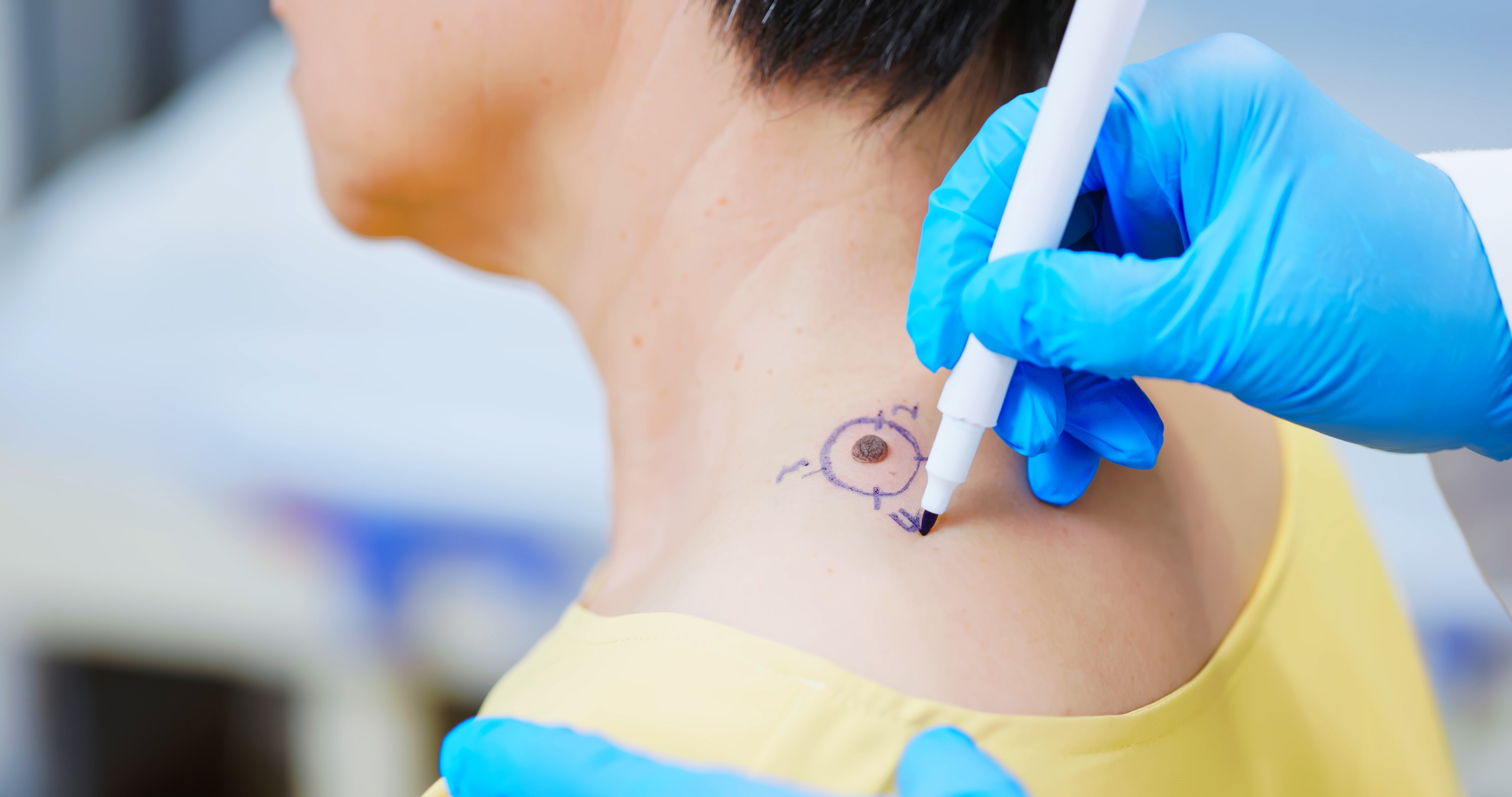
Asymmetry: One side doesn’t match the other.
Border: Irregular or jagged edges.
Color: Uneven or multiple shades.
Diameter: Larger than 6mm.
Evolving: Any visible change over time.
Alternatively, any mole that looks different from the rest—the “ugly duckling”—warrants attention.
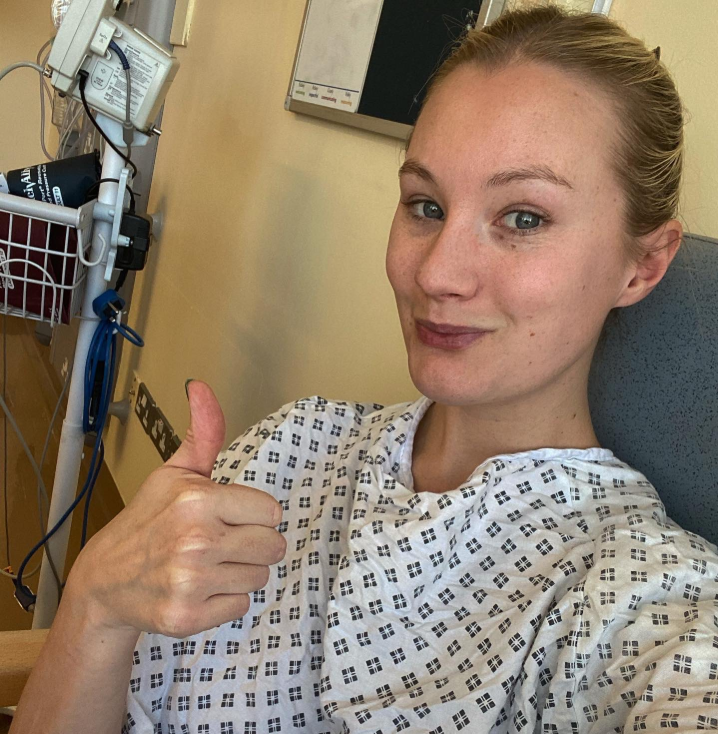
After diagnosis, Sarah underwent several scans: CT, MRI, and PET. Results showed the cancer had already spread to a lymph node in her neck. She needed a major operation: a radical dissection to remove all lymph nodes and surrounding tissue in the area.
The word “dissection” haunted her—it reminded her of biology class. But this time, she would be the subject. The eight-hour procedure took place at Royal Free Hospital in Hampstead on March 11, 2022.
Post-surgery, she was sent home with a surgical drain and began a painful recovery. Follow-up scans showed no visible signs of remaining cancer, but treatment wasn’t over yet.
To reduce the risk of recurrence, Sarah began a year-long targeted therapy using dabrafenib and trametinib—drugs designed to block cancer at the cellular level. These are commonly prescribed for advanced melanoma with certain mutations.
The side effects were brutal: vomiting, fevers, rashes, and extreme fatigue. But the therapy boosted her chances of preventing recurrence to 75%.
Her life became a cycle of pills, scans, blood work, and uncertainty. The physical toll was heavy, but the emotional burden was just as intense. She avoided the sun completely and lost faith in medical assurances.
The experience changed everything. She later wrote, “I am terrified of the cancer coming back. And I’m angry it could have been spotted sooner.”
Even as her body began to recover, fear lingered. Any new mole, any check-up brought waves of anxiety. Cancer no longer felt like a remote threat—it had already happened.
Sarah began speaking out, hoping to educate others. She wanted people to understand that melanoma is not a “mild” cancer. “It can lie dormant and spread like wildfire,” she warned. “It can reach your organs. It’s serious.”
She also urged people to rethink their views on tanning. “There’s no such thing as a healthy tan,” she said. “Any skin color change from the sun is damage. That damage can become deadly.”
On January 15, 2022—just days after her diagnosis—she posted on social media: “Please check your moles, trust your gut, and get a second/third/fourth opinion.”
Her message reached many and continues to do so. For those with fair skin or hard-to-see areas like the scalp, early detection can be the difference between life and death.
On May 4, 2023, Sarah finished her treatment. She marked the milestone online: “Today marks the end of my melanoma treatment (finally!).”
She added a reminder: “While I hope the disease is behind me, my message is the same—look after your skin. It’s your biggest organ!”
Though her treatment ended, her advocacy didn’t. The journey left scars, inside and out. But it also gave her a purpose: to ensure others don’t ignore the signs she was once told not to worry about.
